
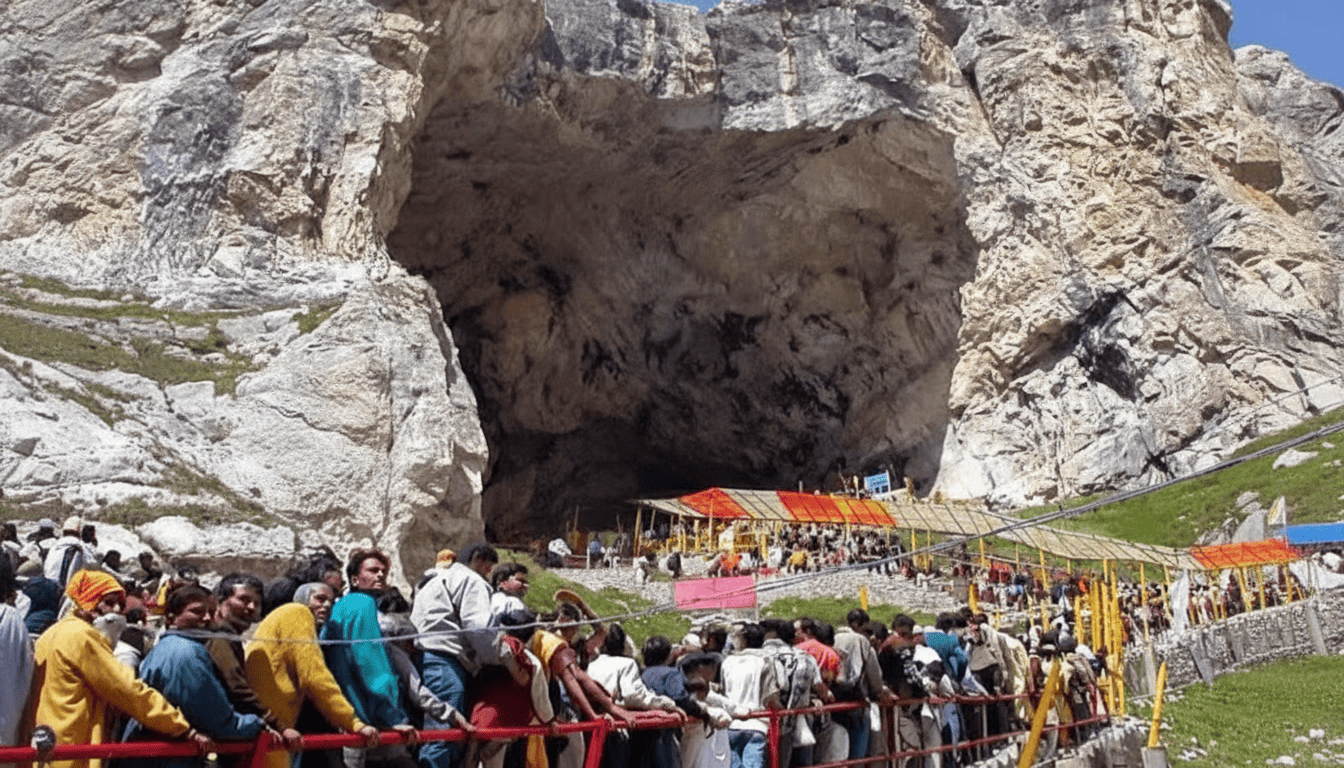

Amarnath Yatra 2026: Complete Travel Guide, Route, Registration & Visiting Information
Nestled in the breathtaking Himalayas of Jammu and Kashmir, Amarnath Temple is one of the holiest pilgrimage destinations for devotees of Lord Shiva. Every year, thousands of pilgrims undertake the sacred Amarnath Yatra to witness the naturally formed ice Shivling inside the holy cave temple. Surrounded by snow-covered mountains, glaciers, and stunning valleys, this spiritual journey offers both devotion and adventure.
The Amarnath Cave Temple stands at an altitude of around 3,888 meters above sea level and is accessible only during a limited period in summer due to extreme weather conditions. The pilgrimage generally begins in June or July and continues till August, attracting devotees from across India and abroad.
History and Significance of Amarnath Temple
According to Hindu mythology, Lord Shiva revealed the secret of immortality, known as Amar Katha, to Goddess Parvati inside the Amarnath Cave. To ensure complete secrecy, Lord Shiva left behind Nandi, the moon, snakes, and even Lord Ganesha on the way before entering the cave. It is believed that a pair of pigeons who overheard the Amar Katha became immortal and can still be seen near the cave by some devotees.
The naturally formed ice Shivling is considered highly sacred. The size of the Shivling changes with the lunar cycle, making it a unique spiritual phenomenon that draws millions of pilgrims every year.
Where is Amarnath Temple Located?
Amarnath Temple is located in the Anantnag district of Jammu and Kashmir. The cave is situated approximately 141 km from Srinagar and is surrounded by majestic Himalayan peaks.
Location Details:
- State: Jammu and Kashmir
- District: Anantnag
- Elevation: 3,888 meters
- Nearest Major City: Srinagar
How to Reach Amarnath Temple
Reaching Amarnath Temple requires proper planning because the cave is located in a remote mountainous region. Pilgrims can reach the shrine through two major routes — Baltal Route and Pahalgam Route.
By Air
The nearest airport to Amarnath Temple is Sheikh ul-Alam International Airport, commonly known as Srinagar Airport. It is well connected to major Indian cities like Delhi, Mumbai, Chandigarh, and Jammu.
After reaching Srinagar, pilgrims can hire taxis or take buses to Baltal or Pahalgam base camps.
Distance from Srinagar:
- Srinagar to Baltal: Approx. 95 km
- Srinagar to Pahalgam: Approx. 90 km
By Train
The nearest railway station is Jammu Tawi Railway Station. Jammu Tawi is connected with major Indian cities including Delhi, Kolkata, Mumbai, and Lucknow.
From Jammu, pilgrims can travel by road to Srinagar, Baltal, or Pahalgam.
Distance:
- Jammu to Srinagar: Approx. 270 km
- Jammu to Baltal: Approx. 400 km
By Road
Jammu and Srinagar are well connected through national highways. Pilgrims can use buses, taxis, or private vehicles to reach the base camps.
Major Road Routes:
- Jammu → Srinagar → Baltal
- Jammu → Srinagar → Pahalgam
The road journey offers mesmerizing views of valleys, rivers, and mountains.
Amarnath Yatra Routes
There are two official routes for Amarnath Yatra.
1. Baltal Route
The Baltal route is shorter but steeper. It is suitable for physically fit pilgrims.
Route Details:
- Distance: Around 14 km trek
- Trek Duration: 1–2 days
- Difficulty Level: Moderate to Difficult
Many pilgrims prefer this route because it allows quicker darshan.
2. Pahalgam Route
The Pahalgam route is longer but comparatively easier and more scenic.
Route Details:
- Distance: Around 36–48 km trek
- Trek Duration: 3–5 days
- Difficulty Level: Moderate
Major Stops:
- Chandanwari
- Sheshnag
- Panchtarni
This route is ideal for pilgrims who want to experience the spiritual journey slowly amidst natural beauty.
Amarnath Temple Visiting Timings
The cave temple remains open only during the Amarnath Yatra season.
General Darshan Timings:
- Opening Time: Around 6:00 AM
- Closing Time: Around 5:00 PM
The exact dates and timings may vary every year depending on weather conditions and instructions from the Shri Amarnath Shrine Board.
Pilgrims are advised to start the trek early in the morning to avoid weather changes during afternoon hours.
Best Time to Visit Amarnath Temple
The best time to visit Amarnath Temple is during the official Yatra season between June and August.
Weather During Yatra:
- Day Temperature: 10°C to 20°C
- Night Temperature: 0°C to 5°C
Weather in the Himalayas can change rapidly, so warm clothing is essential even during summer.
Amarnath Yatra Registration Process
Registration is mandatory for all pilgrims.
Required Documents:
- Valid ID proof
- Passport-size photographs
- Compulsory Health Certificate (CHC)
Registration Modes:
- Online registration
- Authorized bank branches
Pilgrims receive RFID cards and permits after successful registration.
Helicopter Services for Amarnath Yatra
For elderly pilgrims and those seeking a comfortable journey, helicopter services are available.
Popular Helicopter Routes:
- Baltal → Panchtarni
- Pahalgam → Panchtarni
After landing at Panchtarni, pilgrims still need to walk a short distance to the holy cave.
Helicopter bookings usually open before the Yatra season and should be reserved early due to high demand.
Accommodation Options
Accommodation facilities are available at Jammu, Srinagar, Baltal, Pahalgam, and along the trekking routes.
Available Options:
- Hotels
- Guest houses
- Camps
- Tents
- Dharamshalas
Advance booking is recommended during peak Yatra season.
Important Travel Tips
1. Carry Warm Clothes
Temperatures can drop suddenly in higher regions.
2. Stay Hydrated
Drink enough water during the trek.
3. Avoid Heavy Luggage
Carry only essential items.
4. Medical Check-Up
Pilgrims with heart or respiratory issues should consult doctors before planning the trip.
5. Physical Fitness
Walking practice and light exercise before the Yatra can help improve stamina.
Essential Packing List
Here are some important items to carry:
- Woolen clothes
- Waterproof jacket
- Trekking shoes
- Gloves and socks
- Raincoat
- Torch
- Medicines
- Identity proof
- Energy snacks
Nearby Tourist Places
While visiting Amarnath Temple, travelers can also explore nearby destinations in Kashmir.
Sonamarg
Known as the “Meadow of Gold,” Sonamarg offers breathtaking mountain views and glaciers.
Pahalgam
A beautiful hill station famous for valleys, rivers, and forests.
Srinagar
The summer capital of Jammu and Kashmir known for Dal Lake, Mughal gardens, and houseboats.
Safety and Health Precautions
Due to high altitude and difficult terrain, pilgrims should follow safety guidelines carefully.
Important Precautions:
- Walk slowly at high altitude
- Follow official instructions
- Avoid overcrowded areas
- Check weather updates regularly
- Use authorized routes only
Medical camps and security forces remain available throughout the Yatra for pilgrims’ safety.
Why Amarnath Yatra is Special
The Amarnath Yatra is not just a pilgrimage but a deeply spiritual and emotional experience. The combination of devotion, challenging mountain paths, chanting of “Har Har Mahadev,” and the divine sight of the ice Shivling creates unforgettable memories for devotees.
The journey through glaciers, valleys, rivers, and snowy mountains gives pilgrims a unique opportunity to connect with spirituality and nature together.
Conclusion
Amarnath Temple remains one of India’s most sacred pilgrimage destinations. From its mythological importance to its breathtaking Himalayan surroundings, the temple attracts millions of devotees seeking spiritual peace and divine blessings.
Whether you choose the shorter Baltal route or the scenic Pahalgam trek, proper planning, registration, and physical preparation are essential for a safe and memorable Yatra. By understanding the routes, timings, weather conditions, and travel requirements, pilgrims can enjoy a comfortable and spiritually enriching journey to the holy cave of Baba Barfani.